
A roof warranty is really two separate promises stitched together: a manufacturer warranty covering defects in the shingles or materials, and a contractor workmanship warranty covering how well the crew installed them. Premium “system” warranties combine both, but only when a certified contractor uses matched components and files the paperwork on time.
The moment installation wraps up, three things protect your investment:
- Register the manufacturer warranty within the required window, usually 30 to 90 days.
- Get a written workmanship warranty from your contractor, not a verbal promise.
- Save every invoice, contract page, and photo of the finished roof.
Watch for the fine print, too. Proration eats into payouts as the roof ages, storm damage almost never falls under warranty, and transferring coverage to a new homeowner has its own rules and deadlines.
Key Takeaways
A roof warranty only protects you if you register it on time, get workmanship coverage in writing, and understand where proration cuts into the payout.
| Point | Details |
|---|---|
| Two warranties, not one | Manufacturer warranties cover material defects; workmanship warranties cover installation errors. |
| Registration deadlines are strict | Most enhanced warranties require registration within 30 to 90 days of installation. |
| Proration erodes value over time | Prorated warranties pay a shrinking percentage of replacement cost as the roof ages. |
| Matched components protect coverage | Mixing brands or skipping ventilation upgrades can downgrade a system warranty to standard limited. |
| Local support closes the gaps | Crowley Exteriors offers a 25-year workmanship guarantee and helps homeowners register and document warranty claims. |
Table of Contents
- Roof Warranty Explained: Manufacturer, Workmanship, and System Coverage
- What Does a Roof Warranty Cover, and What’s Excluded?
- How Long Does a Roof Warranty Last?
- What Voids a Roof Warranty?
- How Do You Register, Transfer, or File a Roof Warranty Claim?
- How Do You Choose a Contractor Based on Warranty Terms?
- Crowley Exteriors: Backing Warranty Protection With Local Experience
- What Homeowners Get Wrong About Roof Warranty Coverage
- Get Warranty-Backed Roofing Work Done Right the First Time
- Sources
Roof Warranty Explained: Manufacturer, Workmanship, and System Coverage
Every roof carries at least two warranties, and confusing them is the single most common mistake homeowners make when a problem shows up.
- Manufacturer warranty. The shingle or material maker issues this one, and it covers defects in the product itself, things like premature granule loss or a shingle that cracks from a manufacturing flaw. It almost never covers the labor to fix the problem.
- Workmanship warranty. Your contractor issues this, and it covers installation mistakes, misaligned flashing, bad nailing patterns, underlayment gaps. This is where contractor solvency matters. A workmanship warranty is worthless if the company that wrote it closes shop in three years.
- System or extended warranty. Manufacturers reserve their best coverage for contractors who complete certification programs and install a full matched set of components. These upgraded tiers often bundle labor into the material coverage and remove proration for years the standard warranty wouldn’t touch, according to roofing industry coverage of manufacturer warranty tiers.
Most premature roof failures trace back to installation error, not defective shingles, which is exactly why the workmanship warranty carries more weight in the first decade than homeowners assume, per RoofVista’s warranty guide.
What Does a Roof Warranty Cover, and What’s Excluded?
Coverage splits cleanly by warranty type, and knowing which one applies before you call anyone saves a lot of frustration.
- Material defects (manufacturer warranty): granule loss, cracking, curling, delamination. Remedy is usually replacement shingles, sometimes prorated cash value.
- Installation errors (workmanship warranty): flashing leaks, nail pattern failures, underlayment mistakes. Labor is typically included here.
- Excluded almost everywhere: storm and wind damage, hail, normal wear after many years, owner-made modifications, poor attic ventilation, and repairs performed by someone other than the original contractor.
Warranties and homeowners insurance solve different problems. Warranties do not cover storm or accidental damage, insurance does. If a windstorm tears off shingles, that’s an insurance claim. If those same shingles crack from a defect with no storm involved, that’s a warranty claim.
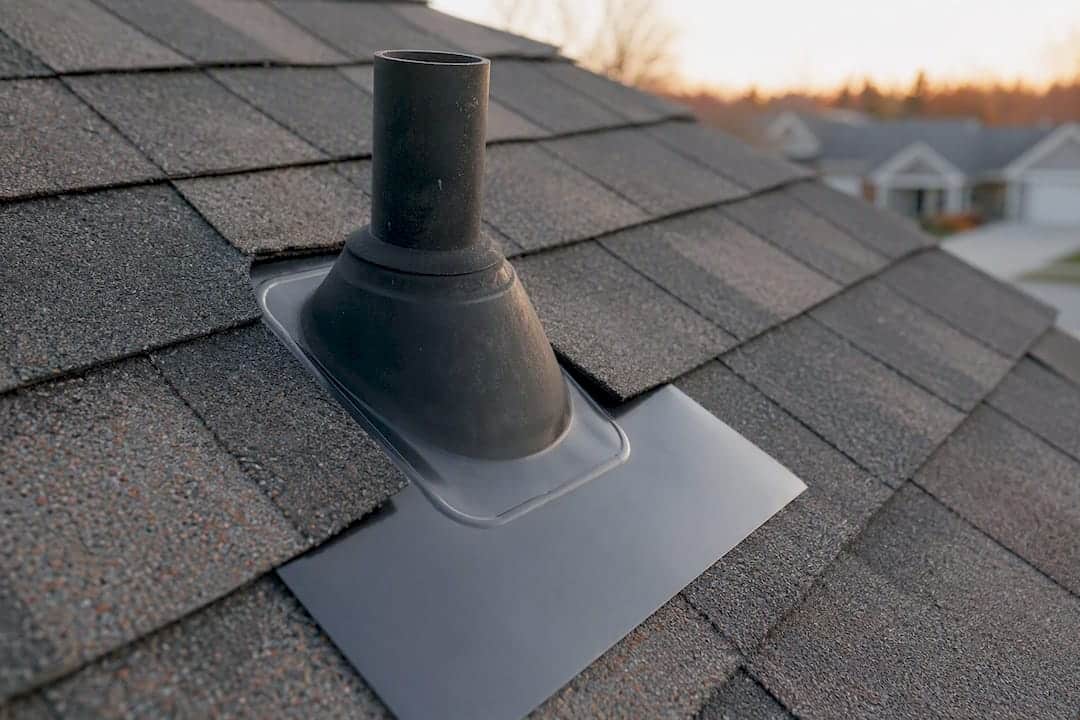
Pro Tip: Take dated photos of your finished roof, including close-ups of flashing and vent boots. If you ever need to prove a defect predates storm damage, those photos are your evidence.
How Long Does a Roof Warranty Last?
“Lifetime” on a shingle bag sounds airtight, but the math behind it rarely stays that generous once your roof ages past the early years.
- Manufacturer material warranties typically run 25 to 50 years, or carry a “lifetime” label.
- Workmanship warranties vary far more, ranging from 1 year on the low end to 25 years for premium system coverage, per RoofVista.
- Most warranties include a non-prorated window, often the first 10 to 15 years, where you’d get full replacement value. After that, proration kicks in and the payout shrinks every year.
Here’s the math that catches people off guard: a standard 50-year manufacturer warranty that turns prorated at year 15 can leave you covering most of the replacement cost by year 20, since many “50-year” warranties reimburse very little material value by year 30 once proration and missing labor coverage are factored in. A non-prorated system warranty from a certified contractor, by contrast, can still pay full replacement value plus labor in that same window. That gap is the real reason system warranties cost more upfront.
What Voids a Roof Warranty?
Warranty denials rarely come from bad luck; homeowners should be aware of common pitfalls that could void their coverage. They come from small oversights that happen during or after installation, and most are preventable.
- Missing the registration window. Manufacturers require registration within 30 to 90 days, and skipping it can knock you down to a bare-minimum warranty tier, per RoofVista.
- Bad attic ventilation. Mixed or inadequate airflow traps heat and moisture, and manufacturers treat this as a maintenance failure, not a product defect.
- Mixing brands or installing over old shingles. Upgraded system warranties often require 100% matched components, starter strip, underlayment, ridge cap, and ventilation, all from the same manufacturer. Swap in one off-brand part and your coverage can downgrade to standard limited.
- Unauthorized repairs, pressure washing, or coatings that strip granules or alter the roof surface.
Pro Tip: Ask your contractor to walk your attic space with you before the roof goes on. Ventilation problems are cheap to fix during installation and expensive to argue about later.
How Do You Register, Transfer, or File a Roof Warranty Claim?
Paperwork is the boring part that determines whether a claim gets paid or denied. Handle it in this order:
- Register within the window. Ask your contractor for written proof of registration, don’t assume it happened automatically.
- Build a paper trail. Keep the signed contract, itemized invoice, ventilation specs, and photos of the completed job.
- File smart. Contact the contractor first for installation issues; go straight to the manufacturer for material defects. Expect a site inspection and a request for documentation before any payout.
- Plan for transfer at sale. Enhanced warranties often allow one transfer to a new owner, sometimes for a fee, and usually within a set window after closing, according to CertainTeed’s guidance on understanding roof warranties.
How Do You Choose a Contractor Based on Warranty Terms?
The contractor you hire determines which warranty tier you qualify for, not just how the roof looks when it’s done. Certification status and financial stability matter as much as price.
Before signing anything, confirm the contractor holds current manufacturer certification, ask to see proof they can register warranties on your behalf, and check how long the company has operated under its current name. A roof replacement done by a certified crew with a solid track record is what unlocks system-level coverage in the first place.
Bring these 12 questions to every estimate:
- What tier of manufacturer certification do you hold?
- Will my workmanship warranty be written, and for how many years?
- Is the workmanship warranty transferable if I sell the house?
- Does your system warranty include labor, or materials only?
- How long is the non-prorated window on this warranty?
- Who registers the manufacturer warranty, and when?
- What happens to my warranty if I hire someone else for a repair?
- Do you use matched components from a single manufacturer?
- How is attic ventilation being handled?
- What’s excluded from this warranty that I should know about now?
- How long has your company been in business under this name?
- What documentation will you give me at project completion?
Crowley Exteriors: Backing Warranty Protection With Local Experience
Crowley Exteriors has spent more than 25 years installing, repairing, and inspecting roofs across St. Charles County, alongside siding and gutter work that affects how a roof drains and ventilates.
- Free inspections and no-obligation estimates before any work starts.
- A 25-year workmanship guarantee that stands alongside whatever manufacturer warranty applies to your materials.
- Help with registration paperwork, documentation, and claims support if something goes wrong down the line.
A roof warranty is only as strong as the paperwork behind it. Registration proof, a written workmanship guarantee, and documented installation photos are what turn a warranty promise into a warranty payout.
What Homeowners Get Wrong About Roof Warranty Coverage
Most advice about roof warranties treats them like insurance policies you buy and forget. That’s backward. A warranty is closer to a maintenance contract with conditions attached, and the conditions matter more than the headline number on the brochure.
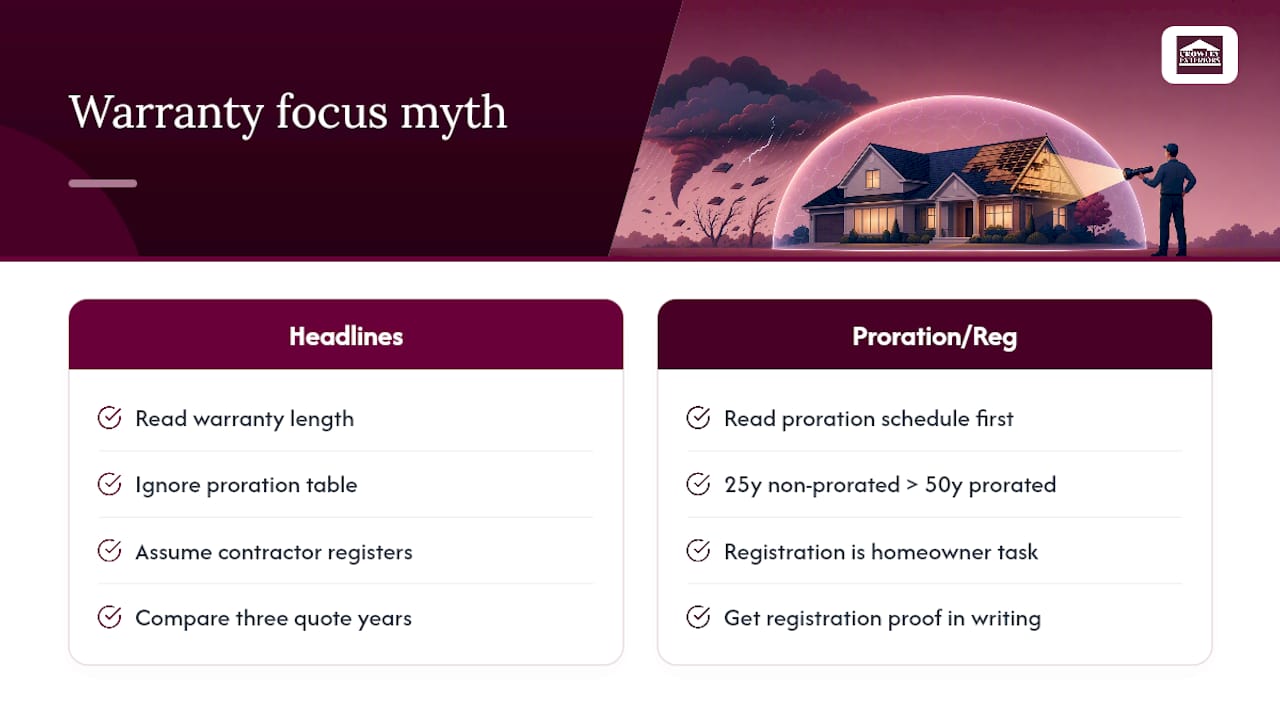
The “lifetime” and “50-year” labels get too much attention while proration schedules get almost none. A homeowner who reads the proration table before signing anything is in a stronger position than one who just compares warranty lengths across three quotes. Twenty-five years of non-prorated system coverage beats fifty years of prorated material-only coverage almost every time, and most homeowners never run that comparison.
The other blind spot is treating registration as paperwork the contractor handles automatically. It doesn’t happen by itself, and missing that 30 to 90 day window is the single most avoidable way to lose an upgraded warranty tier. If you take one thing from this article, make it this: ask for registration proof in writing before the crew leaves your driveway, not after a shingle fails.
— Mario
Get Warranty-Backed Roofing Work Done Right the First Time
Crowley Exteriors gives St. Charles County homeowners something a warranty document alone can’t: a local team that handles the certification, registration, and documentation steps that actually make coverage stick.

Rather than leaving you to decode proration tables and certification tiers on your own, Crowley Exteriors’ crews are positioned to help you qualify for stronger manufacturer warranty tiers from the start, then keep the paperwork organized so a future claim doesn’t stall on a missing form. That matters whether you need a full roof replacement, a siding update, or gutter work that protects your roofline from moisture damage. Before you sign with anyone, get a free inspection and a no-obligation estimate from Crowley Exteriors and ask the 12 warranty questions above in person. Request your free roof inspection today and find out exactly what warranty tier your home qualifies for.
Sources
- Roofing Warranties Explained: Manufacturer vs Workmanship
- Roof Warranties Explained: Types, Coverage, Exclusions, Etc.
- Roof Warranty Guide: Manufacturer vs Workmanship | RoofVista
- Understanding roof warranties — CertainTeed