


Inspect your roof at least twice a year, in spring and fall, and again after any major storm or heavy snowfall. Start with gutters, attic moisture and ventilation, and flashing around chimneys and vents, since these fail first and cause the most damage. Call a professional if you notice sagging, active leaks, or missing sections of shingles. Following the DOE’s guidance on attic durability and IBHS’s winter-readiness recommendations keeps small problems from becoming expensive ones, and professional roofing companies often offer free inspections timed to this schedule.
TL;DR:
- Proper attic ventilation and gutter drainage are critical for extending roof life and preventing internal moisture damage.
- Inspect and maintain your roof seasonally, particularly before winter, to catch small issues like loose shingles, rusted flashing, or clogged gutters early.
- After severe storms or events, walk the perimeter, photograph damage, and schedule professional inspections if necessary to address structural or leak concerns.
- Homeowners can perform basic visual checks but should call professionals for detailed assessments of flashing, underlayment, and fasteners, especially during emergencies.
- The cost and timing of repairs vary widely, with small fixes possible within days and full replacements taking weeks; timely inspections help avoid costly damage.
Table of Contents
- Your season-by-season roof maintenance checklist
- How to inspect your roof yourself, and when to call a pro
- Why attic ventilation and drainage matter more than you think
- When to call a professional and what it costs
- Crowley Exteriors: built around this exact schedule
- Maintenance tips by roofing material
- What actually protects a roof
- Book a free roof inspection with Crowley Exteriors
- Where these recommendations come from
- Sources
- FAQ
Your season-by-season roof maintenance checklist
A roof does not fail all at once. It wears down through small, repeated exposures: standing water, blocked airflow, sun-baked shingles, ice creeping under flashing. A seasonal rhythm catches these problems while they are still cheap to fix.
Spring is your reset point after winter stress.
- Clean gutters and downspouts of leaves, seed pods, and granule buildup from shingles.
- Walk the yard and look up for missing, curling, or displaced shingles.
- Check flashing around chimneys, skylights, and vent pipes for gaps or rust. Our guide to flashing types breaks down which kind you likely have and what wear looks like.
- Look in the attic for water stains, damp insulation, or daylight coming through the roof deck.
Summer is maintenance season, when weather is predictable enough for outdoor work.
- Trim tree branches back at least a few feet from the roofline to reduce debris and prevent scraping damage.
- Inspect the roof after any severe summer storm, especially one with hail or high wind.
- Spot-clean moss or algae streaks using a low-pressure approach rather than a power washer, which can strip granules.
- Check that attic vents are not blocked by insulation, pests, or debris, since summer heat makes ventilation problems worse.
Fall is when you prepare the roof to survive winter loads.
- Clear leaves from gutters and valleys before the first hard freeze, and consider professional assistance with clogged downspouts through specialized residential drain-jetting services to ensure proper roof drainage.
- Confirm downspouts are securely attached and draining away from the foundation.
- Schedule a professional inspection before winter. IBHS specifically recommends this timing to catch loose shingles and failing seals before snow and ice arrive, since a single 1 inch of rain on a 2,000 square foot roof produces roughly 1,250 gallons of runoff that has to go somewhere.
Winter is mostly about watching, not working.
Monitor snow buildup, particularly on lower-pitch sections of the roof, which retain more snow load and need closer attention than steeper slopes. Use a ground-based snow rake to remove excess accumulation rather than climbing onto an icy roof. If you see ice dams forming along the eaves, or if snow depth and roof sagging suggest a structural issue, stop and call a professional immediately.
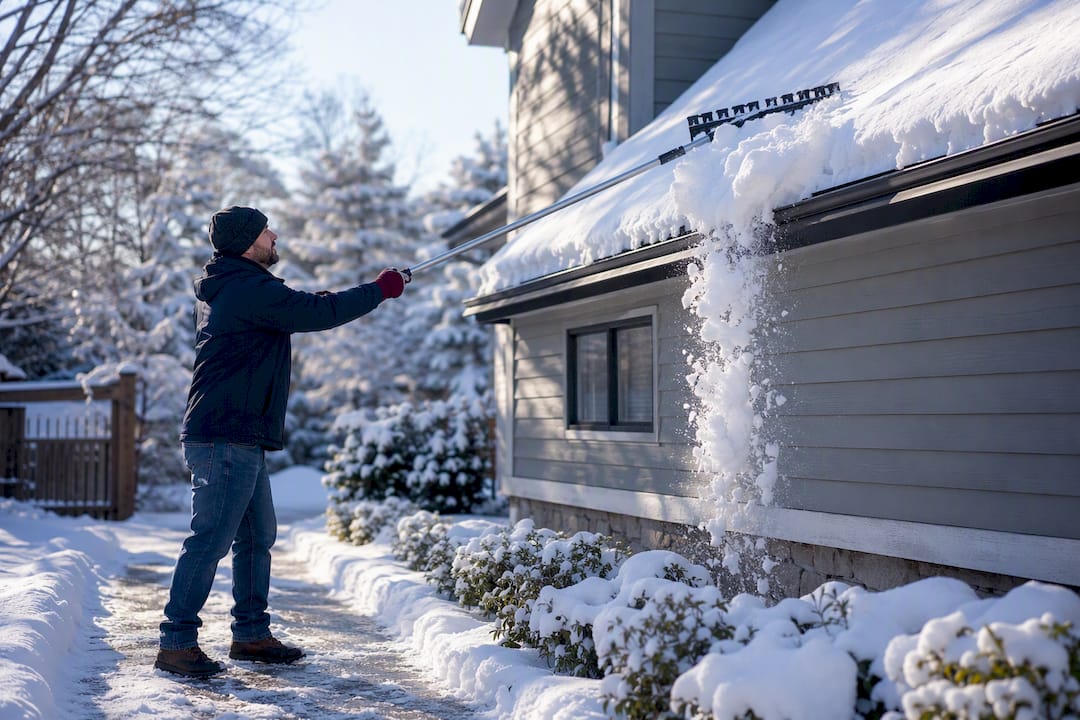
Pro Tip: Keep a simple photo log of your roof every spring and fall. It makes spotting new damage, and proving storm damage to an insurer, much faster.
Event-driven checks matter as much as the calendar. After any hailstorm, windstorm, or heavy snow event, walk the perimeter of your house, photograph any visible damage from the ground, and note dented gutters, displaced shingles, or debris on the roof. Our storm damage guide for the first 72 hours covers what to document before you file a claim.
How to inspect your roof yourself, and when to call a pro
Most homeowners can do a useful visual inspection without ever touching a ladder.
- Walk around the house and look at the roofline from the ground with binoculars if needed.
- Check for shingles that are curling, cracked, missing, or shedding excessive granules into the gutters.
- Look at valleys and around chimneys for rust streaks, gaps, or lifted flashing.
- Go into the attic with a flashlight and check for water stains, mold smell, or damp insulation, particularly near the roof’s edges.
- Note any daylight visible through the roof deck, which signals a gap needing repair.
Do a quick version of this check monthly, and a full one after any storm.
A professional inspection goes further than what you can safely see:
- Close inspection of flashing seals at every penetration, not just the visible ones.
- Assessment of underlayment condition where shingles have already lifted or been removed.
- Fastener and nail-pattern checks that affect wind resistance.
- Ridge and valley condition, since these areas fail before flat shingle sections do.
- Photo documentation you can use for insurance or resale purposes.
If you already have an active leak, place a bucket to catch water, photograph the damage from inside and outside, and avoid walking on a wet or sagging roof. Our emergency roof leak guide and valley leak guide walk through temporary measures while you wait for a repair crew. Never climb onto a sagging roof; per UMN Extension’s guidance on snow and ice risk, a sagging roofline is a sign of structural stress, not a cosmetic issue.
Why attic ventilation and drainage matter more than you think
The roof surface gets all the attention, but the attic underneath and the gutters around the edge do more to determine how long a roof lasts.
Proper ventilation moves air from soffit vents at the eaves up through a ridge vent at the peak. The DOE identifies attic moisture as the leading threat to attic durability, and blocked or unbalanced airflow traps heat and humidity that warp decking and rot framing from the inside. Watch for these signs of a ventilation or moisture problem:
- Musty smell or visible mold in the attic.
- Insulation that feels damp or matted instead of fluffy.
- Frost on the underside of the roof deck in winter.
- Ice dams forming repeatedly along the same section of eave.
Our roof ventilation problems guide covers the specific signs in more detail.
Drainage is the other overlooked half. Extend downspouts so they discharge at least 3 to 4 feet from the foundation, which prevents both foundation settlement and water backing up under roof edges.
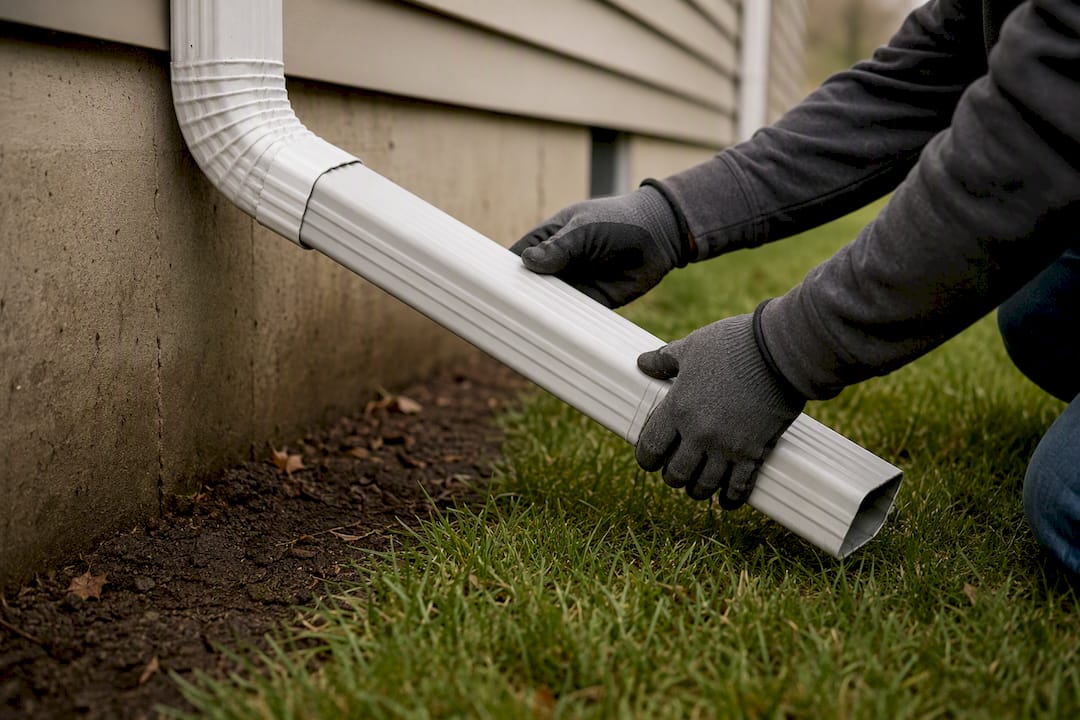
Pro Tip: Gutter cleaning and downspout extensions cost little and often prevent the most expensive damage a roof can cause: rotted fascia and foundation cracks.
Ventilation retrofits and drainage regrading that involve structural or mechanical changes should go to a licensed contractor rather than a DIY attempt.
When to call a professional and what it costs
Some signs mean stop checking and start calling.
- A visibly sagging roofline or roof deck.
- Active leaks staining interior ceilings or walls.
- Widespread shingle loss after a storm.
- Daylight visible through the attic roof deck.
Timelines vary by severity. Emergency tarping for an active leak typically happens the same day. Small repairs, like flashing fixes or a handful of replaced shingles, are usually scheduled within days to a couple of weeks. Full roof replacements often take one to four weeks to schedule, depending on season and local contractor demand.
Cost depends on roof pitch, material, square footage, and the extent of damage, along with whether hail, wind, or ice caused the issue and whether insurance is involved. Our 25 to 30 percent rule guide explains the threshold homeowners use to decide between repairing and replacing a roof.
Crowley Exteriors: built around this exact schedule
A family-owned company with extensive residential roofing experience may offer free inspections and no-obligation estimates timed to spring, fall, or right after a storm; such inspections can include photo notes and repair prioritization. Some roofing companies provide workmanship guarantees.
Maintenance tips by roofing material
Different roofing materials age differently, so your maintenance priorities shift depending on what is over your head.
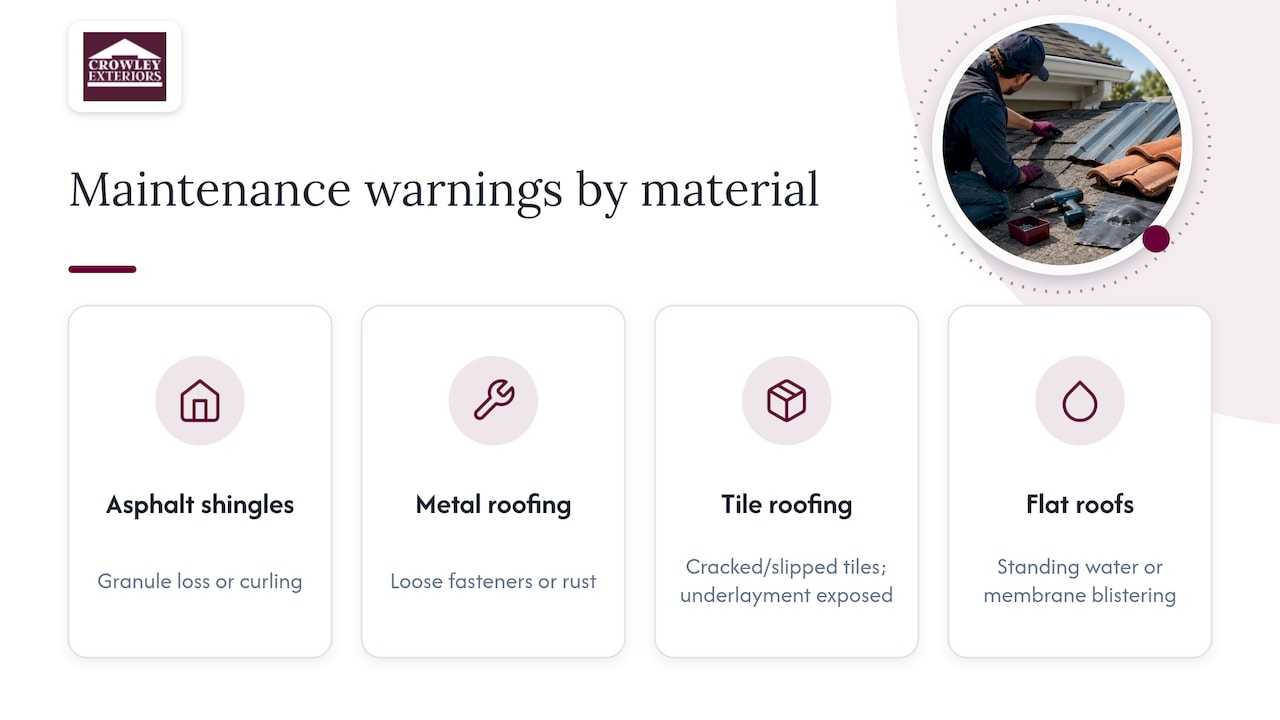
Asphalt shingles, the most common residential roofing material, wear through granule loss and curling. Check for bald patches where the surface looks darker or shinier than surrounding shingles, since that means less UV protection remains. Replace individual damaged shingles promptly rather than waiting, since one gap lets water travel under neighboring rows.
Metal roofing holds up well against weather but needs checks at fastener points and seams, where expansion and contraction over years can loosen screws or separate panels. Rust at cut edges or around penetrations is the main thing to watch for, and touch-up paint can slow corrosion if caught early.
Tile roofing rarely fails at the tile itself but often fails at the underlayment beneath it. Cracked or slipped tiles should be replaced quickly, not because the tile matters much on its own, but because it exposes the underlayment to sun and water it was never meant to face directly.
Flat and low-slope roofs depend entirely on drainage. Standing water after a rain, ponding at low points, or blistering in the membrane are the signs to catch early, since flat roofs have no pitch to help shed problems on their own.
What actually protects a roof
Prevention beats repair every time, and the cheapest, highest-return work is gutters and attic air sealing, not shingle replacement. Schedule inspections before winter and immediately after major storms, not just when something looks wrong.
— Mario
Book a free roof inspection with Crowley Exteriors
Following a seasonal schedule catches small problems early, but a trained eye catches things a homeowner’s checklist misses. Some roofing companies offer free inspections and no-obligation, itemized estimates, sometimes backed by workmanship guarantees on roofing work.
- Book a spring or fall inspection, or call us right after a storm.
- Get a written, itemized estimate with no pressure to sign.
- Ask about our roof replacement and gutter installation services if your inspection turns up bigger issues.
Visit our services page to schedule your free inspection today.
Where these recommendations come from
- DOE consumer guide to durable attics
- Building America attic air sealing guideline
- IBHS winter-ready home checklist
- UMN Extension on roof collapse risk
Sources
- How To Protect Your Home From Winter Weather (IBHS Winter-Ready Home Checklist)
- Roof collapses from snow and ice (UMN Extension)
- Consumer guide to durable attics (U.S. Department of Energy)
- Measure Guideline: Guide to Attic Air Sealing (Building America / DOE)
FAQ
What is typical roof maintenance?
Typical roof maintenance includes cleaning gutters, checking flashing around chimneys and vents, removing debris from the roof surface, and inspecting the attic for moisture or ventilation problems. It also includes trimming overhanging branches and scheduling a professional inspection at least twice a year, in spring and fall.
What is the 25 to 30 percent rule in roofing?
It refers to a common guideline that if damage or needed repairs cover roughly 25 to 30 percent of a roof’s surface, full replacement often makes more financial sense than a patchwork of repairs. Our detailed breakdown of this rule explains how contractors apply it in practice.
What is the best time of year for roof repairs?
Spring and fall are generally the best times for roof repairs, since mild temperatures let shingles seal properly and contractors are not stretched thin by storm-driven emergency work. Scheduling a pre-winter inspection in fall is especially useful for catching problems before snow and ice arrive.
How many years should a house roof last?
Roof lifespan depends heavily on material, with asphalt shingles typically lasting decades and metal or tile roofs often lasting longer, though exact lifespan varies by climate and maintenance history. Regular attic ventilation and gutter maintenance are among the biggest factors in reaching the upper end of a roof’s expected lifespan.
Recommended
- Roof Ventilation Problems: Signs, Causes, And Fixes
- Gutter Overflow Causes: Quick Diagnosis And Fixes
- Roof Replacement Timeline: What Homeowners Should Expect
This article was prepared with AI assistance for general information. For recommendations specific to your property, contact Crowley Exteriors. Call or text us at 314-839-3800.